Modernized variolation
Radvac is working to bring back and modernize variolation by applying advances from the sciences of virology and immunology.
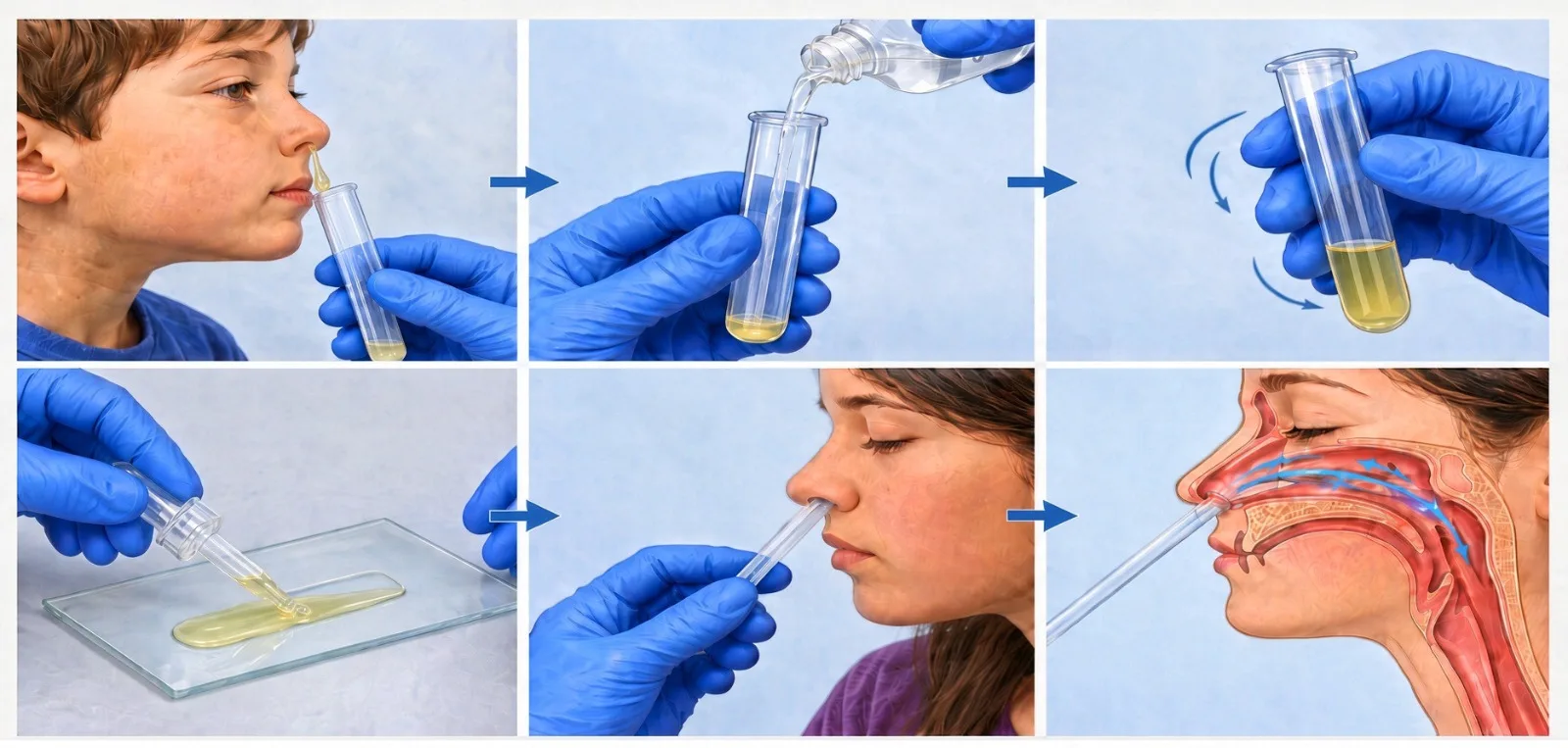
How modernized variolation self-experiments are structured
Collect
A sample is taken from a donor who is confirmed to be ill. For a respiratory virus that usually means nasal mucus, which carries a high pathogen concentration in the first few days of symptoms.
Inactivate or attenuate
The pathogen is rendered unable to replicate — or slowed so that it replicates poorly. Radvac's current focus is hydrogen peroxide, which disables pathogens while partly preserving the antigen structures the immune system needs to see.
Administer
The treated sample is self-administered by a route chosen to stimulate immunity. Adjuvants like Neomycin, Polymyxin B, and β-glucans are used to amplify the immune response.
Monitor
Outcomes and any side effects are recorded for several weeks.
Measure response
The goal is to stimulate an immune response resembling natural infection without the illness: mucosal antibodies at the point of entry plus systemic immunity. This can be verified by sequencing the pathogen's genome and then blood testing for appropriate antibodies.
Modernized variolation vs conventional vaccines
| Category | Modernized variolation | Conventional vaccines |
|---|---|---|
| Speed of deployment | Can be deployed immediately at the site of an outbreak. | Take years to be developed, manufactured, tested, approved by regulatory bodies, and widely deployed. |
| Match to current variants | Uses the pathogen actually circulating, so it is inherently matched to that variant | Typically target older variants that existed at the start of the vaccine development process |
| Regulatory requirements | Self-administration does not require regulatory approval | Require regulatory approval, an expensive, multi-year process |
| Cost | Potentially very low-cost and locally deployable | Often expensive due to R&D, manufacturing and distribution |
| Safety | Can be made very safe using accessible inactivation technology. | Generally very safe |
| Similarity to natural infection | Mimics natural infection, minus the illness; broader immunity | Often induces narrower responses; depends on platform |
| Mucosal immunity | Typical routes of administration should induce mucosal immunity | Licensed vaccines (e.g. mRNA) induce weak mucosal immunity |
| Public acceptance/hesitancy | May be more acceptable to individuals skeptical of conventional vaccines | Hesitancy exists due to distrust, past public health missteps, misinformation, and perceived risks. |
Routes under investigation
Intranasal
Via spray, nebulizer, or insufflation. Over 90% of respiratory pathogens enter through the nasal mucosa and respiratory tract, so this is the route that Radvac self-experimenters are studying first.
Transdermal
A microneedle roller or array carries the inoculum past the stratum corneum into the dermis. This is the modern equivalent of the dermal route that became standard for smallpox variolation. Rollers with sterilizable titanium needles can be purchased for under $20.
Oral cavity
An H₂O₂-inactivated sample is placed around the gums and then flossed in place targetting the gingival sulcus. A similar approach was recently shown to drive both mucosal and systemic immunization in animal models.
Enteric capsule
A capsule that protects its contents from stomach acid and releases them in the gut. Yeast is a potential adjuvant, in line with other Radvac work.
Illustration
Read the white paper
Further reading
Help us with this work
Feedback, criticism, suggestions, and personal reports are all welcome.