RaDVaC launches AI-based antivirals approach

Even the best vaccines take 7 to 10 days to mount a preliminary adaptive immune response. And full protection often takes additional weeks and boosters to develop. In the event of an outbreak of a serious pathogen, immediate protection is paramount—even if the protection is incomplete or imperfect.

Antivirals can be effective immediately but the most effective ones are tailor designed for a specific pathogen. However, many drugs and chemical compounds can individually act as weak to moderately effective antiviral compounds against pathogens they were not designed to target—and in combination they can be even more effective. The number of possible combinations is enormous but AI is being used in other contexts to efficiently recognize the most potent repurposed drugs and combinations, and we are building on these advancements.

RaDVaC is developing an AI-based public server for the selection of rapid deployment antivirals. The predicted antivirals will consist of combinations of repurposed, regulatory approved drugs and generally recognized as safe (GRAS) compounds. We hope to have a working version in a few months for beta testing.

Rapid Deployment Vaccine Collaborative (RaDVaC) moves to Prime and Spike and discontinues use of chitosan-peptide vaccine formulations

Due to cost, availability, and published efficacy data of another vaccine design, RaDVaC has discontinued its use of its original chitosan and peptide vaccine platform, and has replaced it with the “Prime and Spike” approach published by Mao and colleagues.

From the beginning of the SARS-CoV-2 pandemic the Rapid Deployment Vaccine Collaborative (RaDVaC) has designed, refined, self-produced and self-administered multiple generations of chitosan and peptide nasal vaccine formulations. However, many people reported difficulty in having the peptides synthesized. Plus, although the per dose cost of the peptides was low if ordered at large scale, small-scale production was expensive, and overall production costs were minimally $1000, and typically more. And for various reasons, it was also challenging to assess efficacy.

To support more rapid deployment and widespread adoption, RaDVaC has adopted the vaccine platform published by Mao and colleagues of the Iwasaki lab at Yale. Their extremely simple, off-the-shelf vaccine design consists of a single component—a SARS-CoV-2 Spike protein trimer—and no adjuvant. They showed that the vaccine elicits robust T-cell and B-cell immune responses. RaDVaC has experimented with this vaccine and because it consists of a single, relatively inexpensive and commercially available ingredient, we have adopted it as our default nasal vaccine. We currently use it in combination with commercial injectable vaccines in a standard prime and spike approach: the injected vaccine is followed a few weeks later by self-administration of the nasal vaccine.

Rapid Deployment Vaccine Collaborative (RaDVaC) Receives $2.5M from Balvi Filantropic Fund to Improve Global Vaccine Access

The Balvi grant will enable continued development, testing, and continuous updates and improvements of open-source vaccine designs and production methods, including “vaccine factory in a tube” technology. Funds will also support build-out of a decentralized scientific network for open sharing of production methods and technologies, as well as clinical trial and immunology data.

The Rapid Deployment Vaccine Collaborative (RaDVaC) is pleased to announce a $2.5M grant from Balvi, the philanthropic organization established by Ethereum co-founder Vitalik Buterin, which funds high-risk, high-reward projects to improve global pandemic preparedness and response capabilities.

The SARS-CoV-2 pandemic continues to reveal very serious, ongoing deficiencies in global pandemic readiness and public health responses. Once lifesaving vaccines were deployed, they showed very high levels of effectiveness. However, despite having been designed and produced in the earliest days of the pandemic, due to complex, slow, and inefficient regulatory burdens, they remained inaccessible for nearly a year in high-income countries, and for far longer in low- and middle-income countries. In response to this urgent humanitarian need caused by the vaccine access gap, RaDVaC developed and published free and open-source vaccine recipes and protocols, and offered scientific support to individuals and groups worldwide producing and testing the vaccines.

Since early 2020, RaDVaC has been creating technically accessible open-source vaccine designs and development tools, and constantly refining them in light of ongoing research. RaDVaC will use funds from Balvi to expand these activities and to create distributable vaccine resources, including “vaccine factory in a tube” technology. 

RaDVaC and Balvi share a commitment to bridging and shortening the vaccine access gap, and in establishing both the citizen-science right to vaccine creation, and vaccine access as a public good. More broadly, both organizations share the goal of fostering decentralized, open-source research and knowledge dissemination. 

With this grant, RaDVaC will be able to expand its efforts to enhance global pandemic preparedness on a number of fronts.

Year-End Review & Updates, 2021

Dear Radvackers,

As 2021 comes to a close, we see hopeful glimpses of a waning pandemic. Thus far, the omicron variant seems milder, and even though it is spreading rapidly and we are bracing for a surge into 2022, we are also hopeful that we will emerge with much higher immunity from combinations of vaccination and natural infection. Nevertheless, these latter developments cannot lull us into a false sense of future security. Omicron will not be the last SARS-CoV-2 variant, and a more dangerous but also highly transmissible variant might yet arise from the many remaining global reservoirs of virus. However quickly they emerge, future outbreaks and pandemics lie ahead, and are best dealt with preventively rather than reactively.

As we transition into the new year, newly hopeful but ever committed to building a better global health future, the core team at RaDVaC want to take this moment to express our deepest gratitude to the many who participated in the audacious global experiment called RaDVaC. Thanks to the many who tested and experimented with our vaccine designs. Thanks to those who shared vaccine design variations and efficacy data with us. Thanks to outspoken and public supporters of freedom of self-determination in the face of an invisible but deadly enemy. And thanks to those individuals and organizations who provided financial support to the RaDVaC project.

Many of our newest subscribers became aware of us in response to the news that RaDVaC is a recent recipient of an Astral Codex Ten grant, which we’re honored to receive. Scott Alexander’s endorsement means a lot to us, and the financial support will be put to good use. Read on for details about that.

All of your collective contributions have helped make 2021 a year of great progress. Here are some highlights of RaDVaC’s accomplishments in 2021:

  • Better vaccines: Gen 10 and beyond. We made multiple, substantial improvements to the general vaccine platform, all of which are usable in vaccines against pathogens beyond SARS-CoV-2.
    • Improved nanoparticle vehicle and adjuvant. The primary vaccine delivery vehicle and adjuvant chitosan proved suboptimal, due primarily to its insolubility in water; therefore, we investigated and experimented with some options and settled on the use of a chitosan derivative that goes by the acronym HACC. HACC has all of the benefits of chitosan but is water soluble at physiological pH, allowing easier vaccine preparation and better overall performance.
    • Nanoparticle surface display of antigens. Based on clever chitosan nanoparticle designs from the research literature, we redesigned B-cell epitopes to facilitate chitosan/HACC surface display of epitope peptides.
    • Ii-key technology for enhancing the immune response. A small peptide tag called Ii-key was added to certain epitope sequences to amplify the T helper cell response, increasing the potency of both B-cell and T-cell components of the vaccine.
    • Dendritic cell targeting. We introduced a peptide into our vaccine designs, adapted from recent publications showing enhanced antigen presentation and processing by targeting vaccine nanoparticles to professional antigen presenting dendritic cells.
  • First RaDVaC conference. Unlocking Vaccines: Open-Source Vaccine Summit 2021 (all conference presentations available on YouTube here). Here are some highlights from the conference:
    • Our chief scientist, Dr. Preston Estep, provided a comprehensive background on the RaDVaC project, and the urgent need for radical improvement in access to vaccines and the requisite knowledge and technologies for producing them. Dr. Estep highlighted valuable lessons that have been learned from open-source software, especially Linux, which has provided high performance with transparency and security.
    • RaDVaC clinical trials liaison, Brian Delaney, and Professors Nir Eyal and Ben Hurlbut discussed the bioethics of public health research & vaccine deployment 
    • Member of EU Parliament Jutta Paulus, and policy researcher Milena Leybold joined us to provide insight from the policy perspective of vaccinology, bringing clarity to the obstacles that inhibit conventional public investment in more accessible vaccine infrastructure.
    • Dr. Reza Mostofi presented data on the efficacy of RaDVaC vaccines in animals, and in human volunteers. His team found that the Gen 8 and Gen 9 vaccines show high efficacy as boosters, but much lower efficacy when used as a single dose in previously uninfected volunteers. These insights catalyzed improvements represented in our Gen 10 and later designs.
    • RaDVaC member Dr. George Church provided insights from his decades of experience in pioneering (and self-experimenting with) highly leverageable biotechnologies, and the opportunity for those design & collaboration principles to have an impact on vaccinology and the future of global health.
    • Dr. Craig Travis discussed the unique features and advantages of the mucosal immune system in combatting respiratory diseases, and more.
    • Renowned economists Alex Tabarrok and Andrew Lo shared their views from the economic side of vaccinology. Dr. Tabarrok praised RaDVaC and acknowledged the challenges of accelerating the process of bringing a vaccine to market. Dr. Lo, a recognized worldwide authority on vaccine development and economics, presented and discussed historical data showing that vaccines are the most successful of all therapeutic classes, and contrasted their importance with poor returns on investment, underscoring the extreme undervaluation of vaccines within the framework of conventional bio/pharma development.
  • Vaccine testing and trialing. Data on pre-Gen 10 vaccines guided us to many substantial improvements in later vaccine designs. Our vaccine platform is now better but the older data are not relevant to recent generations because the vaccines are different in every key feature. We are testing immune correlates of the most updated generations, and starting in January we will be testing newer generations that target omicron. A major challenge of a rapid deployment vaccine response to a rapidly evolving pathogen is the developmental timeline for maintaining effectiveness against the latest variant(s). This drives our ultimate goal to create an integrated plug-and-play vaccine design and trialing platform, allowing high-confidence of effectiveness upon initial vaccine deployment.
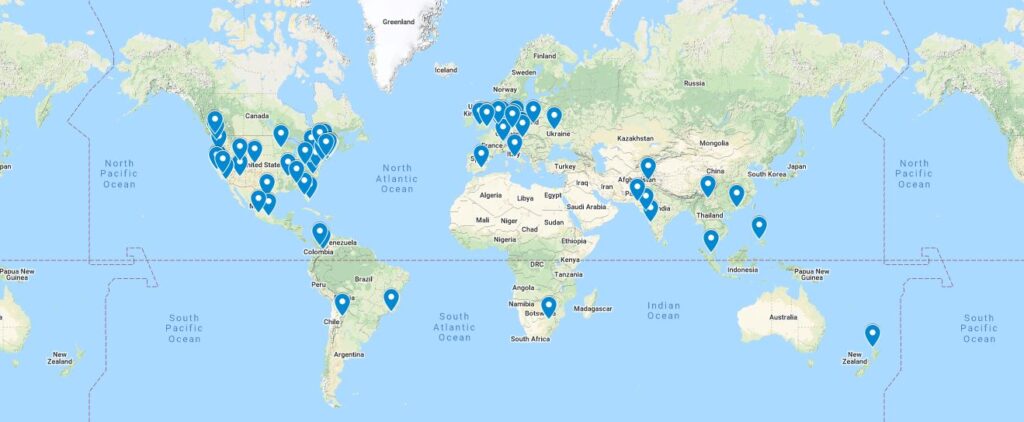
  • Developers, developers, developers. Early this year we launched our Researchers Map, which helps scientists connect with potential collaborators, near and far. As of today the map has 80 entries from 23 countries. If you’re interested in working together on vaccine R&D, or know someone who is, drop a pin and tell everyone about your work and ambitions! The Researchers Map is cool and useful, but we need to grow the network and improve connectivity. If you are (or know) an experienced web or app developer who can help us improve our networking platform, please connect with us.
  • Vaccine regulatory approvals, scaling, and commercialization. In order to grow the project to serve more people in need of vaccines, RaDVaC is participating in booting up startup companies, beginning with a newco in India.
    • This newco is a Delaware C corporation with a public benefit subsidiary in India
      • Dr. Estep is a co-founder and received a percentage of founding equity, and assigned ownership of those shares to RaDVaC.
      • Newco is preparing to to raise a series A soon.
      • Pre-clinical studies will be done in India, followed by clinical trials for regulatory approval.
    • Other newcos can be booted up in other geographic jurisdictions. Let us know if you are interested.
    • We hope that RaDVaC’s participation and equity stake will be a model for a new kind of venture philanthropy to achieve public benefit.
  • Omicron variant vaccine design and white paper
    • Although omicron is heavily mutated, the Gen 11 vaccine is largely unaffected because of our focus on conserved neutralizing epitopes. Nevertheless, we are taking the opportunity to improve our current vaccines generally, and to create a specific vaccine allowing us to track and analyze omicron-specific immunity.
    • Gen 12 update coming soon. Omicron is taking over but delta remains in circulation, and generally appears to be more virulent than omicron. Therefore, the new white paper will provide vaccine designs to target both delta and omicron variants.
    • This new design will allow for distinction of omicron and pre-omicron immunity.
  • Recombinant antigen production. We have begun to explore the use of microorganisms to produce antigens, which have certain advantages over synthetic peptides. This research focus is our first step toward the possibility of a vaccine factory in a cell or test tube.

Looking ahead to 2022, we have exciting plans to continue the expansion of the RaDVaC project and network. If you are interested in working to expand vaccine access in times and places of greatest need, stay tuned and please connect with us! If you like what we do and want to make a financial contribution to support our free and open-source vaccinology work, you can contribute here.

Thank you again to all who have contributed to the growing success of RaDVaC. We look forward to doing great things for and with you in 2022.

Team RaDVaC

RaDVaC statement on the SARS-CoV-2 Omicron variant

Coronavirus Antiviral & Resistance Database: SARS-CoV-2 Variants: Variants genome viewer: Omicron

Version 1.0
December 1, 2021

The Omicron variant of SARS-CoV-2 has over 50 mutations, with 32 mutations in the Spike protein alone1. Both of these numbers are far higher than for any previous variant of concern.

These mutations are so numerous that they are likely to impact transmissibility and virulence, but in ways that are currently impossible to predict. Nevertheless, the effects of certain mutations on specific current therapies and vaccines can be predicted with reasonable confidence. 

Key observations on the high-impact mutations of Omicron variant:

  • Omicron has 15 substitution mutations in the 200 amino acid receptor binding domain (RBD) of Spike.
    • About half of these mutations are concentrated in the portion of RBD that interacts with human ACE2 receptor (referred to as the receptor binding motif).
    • Four mutations are substitutions of amino acids that directly contact the ACE2 receptor: Q493R, Q498R, N501Y, Y505H
  • For comparison, the Alpha, Beta, and Gamma variants each contain only one mutation in ACE2 contact residues (N501Y), and the Delta variant contains zero2.
    • Omicron also has mutations at residues 452 and 484. Mutations at these positions in the Delta variant reduce the effectiveness of vaccines.

Based on structural evidence of interactions between neutralizing antibodies and the Spike protein, we make the following predictions:

  • Effect on RBD-based vaccines: We predict that Omicron will substantially reduce effectiveness of RBD-based vaccines, some of which have been reported to be highly effective against previous variants.
  • Effect on Spike-based vaccines: The effectiveness of Spike-based vaccines will be compromised because RBD portions of these vaccines will be substantially less effective. Portions of Spike involved in membrane fusion (which RaDVaC has included in multiple generations of published vaccine candidates) are not mutated in Omicron and will provide some protection, but overall protection will be reduced. These vaccines include BioNTech-Pfizer Comirnaty, Moderna Spikevax (mRNA-1273), Janssen/Johnson & Johnson COVID-19 vaccine, and AstraZeneca/Oxford ChAdOx1 (AZD1222).
  • Effect on neutralizing antibody therapies:
    • Regeneron monoclonal antibody cocktail REGN-COV2, consisting of antibodies REGN10933 and REGN10987.
      • Two mutations in the Omicron RBD (K417N, E484K) have been shown to essentially abolish binding of antibody REGN109333,4 and three mutations in the RBM result in substitutions of amino acids contacted by REGN10987 (N440, G446, Q498)5. We therefore predict that the Regeneron cocktail will be largely ineffective against Omicron.
    • Lilly monoclonal antibody cocktail consisting of antibodies bamlanivimab (LY-CoV555) and etesevimab (LY-CoV016).
      • LY-CoV555 binding is reduced by mutations at  K417N and E484, while LY-CoV016 binding is likely reduced by K417N6,7,8,9. We predict that the Lilly cocktail will be substantially less effective against Omicron. 
    • Vir-GlaxoSmithKline sotrovimab. Sotrovimab binds to the glycan of N343 and surrounding amino acids, and should be relatively unaffected by omicron mutations.
  • Effect on RaDVaC vaccine candidates:
    • Current RaDVaC peptide vaccine designs are largely resistant to the mutations of Omicron. This is in keeping with the strategy of RaDVaC vaccines to be more robust against variants.
      • RaDVaC core B-cell epitope peptides target the fusion peptide. Only one optional B-cell epitope peptide targets the RBD. Full-length Spike-based vaccines also contain these epitopes, but RBD vaccines do not.
      • Current RaDVaC designs target multiple immunodominant T-cell epitopes, none of which is affected by Omicron. Neither Spike-based vaccines nor RBD-based vaccines contain any of the verified, immunodominant cytotoxic T-lymphocyte epitopes. Such immunodominant T-cell epitopes are key to immunity that is durable and resistant to variation over the long term.
    • Recent discoveries about SARS-CoV-2, in addition to Omicron, have suggested minor refinements to RaDVaC Gen 11. Therefore, RaDVaC will soon release the Gen 12 vaccine design.

Summary: We predict the extensive variation of Omicron will reduce the effectiveness of Spike-based vaccines, and substantially reduce the effectiveness of RBD-based vaccines and antibody therapeutics (other than GSK sotrovimab), yet have little impact on RaDVaC vaccines.

RaDVaC remains committed to producing and distributing free, open-source, and up-to-date vaccine recipes and high-quality vaccine deployment tools, including a vaccine platform that is modular, easy to produce, rapid to adapt, and resilient to pathogen mutation. In addition to updates to our whitepapers, we are now increasing our investment in studies to validate and generalize the technologies we produce in order to create a plug-n-play vaccine platform that provides high confidence of effectiveness when used for the first time against a novel pathogen.

References:

  1. https://en.wikipedia.org/wiki/SARS-CoV-2_Omicron_variant#Mutations
  2. https://en.wikipedia.org/wiki/SARS-CoV-2_Delta_variant#Mutations
  3. https://www.science.org/doi/10.1126/science.abf9302
  4. https://www.nature.com/articles/s41586-021-03398-2
  5. https://science.sciencemag.org/content/369/6506/1010.abstract
  6. https://www.cell.com/cell-host-microbe/pdf/S1931-3128(21)00283-3.pdf
  7. https://www.ncbi.nlm.nih.gov/pmc/articles/PMC8524965/
  8. https://www.nature.com/articles/s41598-021-99827-3
  9. https://www.sciencedirect.com/science/article/pii/S2666379121000719

RaDVaC: Maximizing Global Vaccine Access with the “Linux of Vaccines”

The fragility of our global infrastructure has never been more clear. Decades of neglect have rendered public health catastrophically under-equipped to deal with emerging infectious diseases like COVID-19. Despite the scientific progress in scientific tools that enable biomedical development in remarkable time — measurable in hours and days, rather than in months and years — rigid and hyper-centralized research, rigid regulatory frameworks, and limited production methods frameworks are unable to translate practical vaccine science into real-world action in time to curb outbreaks from disruptingderailing global health, and the global economy. The costs of these failures with regard to COVID-19 are vast and still mushroominggrowing, while the riskpace of new viral threats spillover events is only increasing with urbanization, industrialization, and habitat changes around the world. 

We are met now with an inescapable choice: Do we accept and tolerateadjust to a future of more pandemics, or do we act to strengthen our abilitiesy to predict, prevent, and defend ourselves against them?

The Rapid Deployment Vaccine Collaborative (RaDVaC) is a 501(c)(3) organization devoted to the latter: taking decisive action to protect humanity against the current and emerging pandemics health., and creating a foundation of unprecedented scientific access and on which all of humanity can rise to the health challenges of the next century and beyond. In short, our goal is to maximize vaccine access to vaccines by maximizing global access to 1) the underlying science and tools of vaccinology, 2) specific research findings formulas for vaccine production, 3) in times and places of need,  before outbreaks become pandemics.

Founded by a team of scientists affiliated with Harvard and MIT, RaDVaC is building a platform of modular, highly transparent, radically accessible vaccines that can be both rapidly designed and rapidly deployed anywhere with a high confidence of safety and success. The team has drawn from decades of modern vaccinology, as well as a legacy of open-source design principles that have ensured continuous innovation and security across both computer- and bio-science. In fact, a powerful precedent for understanding the impacts that RaDVaC’s approach to vaccinology can achieve can be found in Linux’s history as a decentralized, collaborative software-building resource.

Most people are unaware of Linux’s proliferation from a single programmer’s project in the early 1990’s, to the backbone of modern digital and cybersecurity infrastructure. Open-source Linux-based code underlies 23 of the top 25 websites online, 80% of mobile device operating systems, and more than 90% of cloud computing around the globe today. The transparency, accessibility, and overall decentralization of high-quality tools provided by Linux have evolved into thousands of digital applications (many of which, like Google’s Android operating system, are key products of the world’s most profitable companies).

RaDVaC is building the open-source operating system of vaccines. In a world of viruses which evolve constantly, so too must our defenses against them. That is why RaDVaC is building and sharing tools for modular vaccines that can be adapted quickly, with high confidence of success, produced using scalable infrastructure that leverages the power of collaborative, open-source development that hasn’t yet been activated in vaccinology and global health security. Like Linux, we are constructing resources for others to build with, innovate with, and outsmart pathogens with — both individually and as a global network. 

RaDVaC is seeking to raise $3M in the next 12 months to expand this effort. Funds will be used to grow our team, evaluate and test new vaccine formulations, extend the data sharing platform, and to help seed new businesses for eventual clinical trialing and enterprise-scale production of vaccines based on the RaDVaC platform. We are in the early days of this new model of global bio-defense, but if we invest wisely in the highly leverageable infrastructure that RaDVaC is building, we can empower the whole of humanity forward into a healthier, more prepared, and more sustainable future.